In the realm of advanced biochemical research, maintaining molecular integrity is the foundational pillar of any successful experiment. Synthesized peptides are incredibly sophisticated structures, comprised of specific amino acid sequences that dictate their behavior in cellular assays and in-vitro studies. However, this structural complexity also renders them highly susceptible to environmental degradation.
Whether you are conducting longitudinal cellular models or immediate binding assays, the handling, reconstitution, and storage of your compounds directly dictate the accuracy and reproducibility of your data. A peptide verified to ≥99% purity upon synthesis can quickly degrade into useless fragments if laboratory protocols are not strictly observed.
This comprehensive guide outlines the critical best practices for handling lyophilized peptides, selecting appropriate diluents, and executing reconstitution without causing shear stress to fragile molecular bonds. For precise measurements during this process, always utilize a reliable Dosage Calculator.
Understanding the Lyophilized State
When research-grade peptides are synthesized, they are processed into a state known as lyophilization, commonly referred to as freeze-drying. During this manufacturing phase, water is sublimated from the peptide in a high-vacuum environment at extremely low temperatures.
The resulting product is a solid, stable “puck” or powder of lyophilized peptide. In this state, the kinetic energy of the molecules is vastly reduced, severely stunting the natural processes of oxidation and hydrolysis that lead to peptide degradation. This is precisely why high-quality research compounds are shipped in powder form rather than pre-mixed liquids.
While the lyophilized state offers excellent stability for transport and long-term storage, it is not impervious to the elements. Even before reconstitution, vials must be kept away from direct ultraviolet (UV) light and severe heat, both of which can begin breaking covalent bonds and altering the peptide’s molecular weight before your research even begins.
Selecting the Correct Diluent: Bacteriostatic vs. Sterile Water
The most critical decision in the reconstitution process is selecting the appropriate solvent. Introducing a liquid to the lyophilized powder initiates a rapid transition back into an active state, making the compound highly vulnerable to bacterial contamination and rapid degradation.
The two primary diluents used in laboratory settings are Bacteriostatic Water and Sterile Water. Understanding the chemical distinction between them is vital for experimental design.
Bacteriostatic Water (BAC)
Bacteriostatic water is sterile water that has been formulated with 0.9% benzyl alcohol. The addition of benzyl alcohol is crucial for longitudinal research. It acts as a preservative, preventing the growth of most bacteria and pathogens that could be introduced into the vial during repeated extractions with a syringe.
For the vast majority of in-vitro laboratory applications where a single vial will be drawn from multiple times over several weeks, Bacteriostatic Water is the required standard. It preserves the sterile environment within the vial, extending the viable research window of the reconstituted peptide for up to 28 days when properly refrigerated.
Sterile Water
Sterile water contains no preservatives or chemical additives; it is simply pure water that has been sterilized. While it is an excellent solvent, the lack of benzyl alcohol means there is zero defense against bacterial colonization once the vial seal is punctured.
Sterile water should strictly be used for immediate, single-use laboratory applications. If an experiment dictates that the entire vial of peptide will be utilized within 24 to 48 hours, or if the specific cellular assay is highly sensitive to benzyl alcohol, sterile water is the appropriate choice. Any unused portion remaining after 48 hours must be safely discarded to prevent compromised data from bacterial interference.
The Reconstitution Protocol: Step-by-Step
Reconstitution is not as simple as forcing liquid into a vial. The amino acid chains that make up peptides are fragile. Introducing fluids too rapidly or aggressively shaking the vial can cause mechanical shear stress, physically shattering the peptide bonds and rendering the compound inert.
Adhering to the following meticulous protocol ensures maximum structural preservation.
- Environmental and Equipment Preparation: Ensure your laboratory workspace is sanitized. Swab the rubber stoppers of both the peptide vial and your chosen diluent (Bacteriostatic or Sterile water) with 70% isopropyl alcohol. Allow the stoppers to air dry completely to prevent introducing alcohol into the compound, which could denature the peptide.
- Pressure Equalization: Lyophilized peptides are sealed under a vacuum. If you immediately pierce the stopper and attempt to inject the diluent, the vacuum will forcefully suck the liquid into the vial. This violent rush of fluid acts as a physical shock to the peptide powder, potentially breaking molecular bonds. To prevent this, first draw a volume of air into your syringe equal to the amount of diluent you plan to extract, inject that air into the diluent vial, and then draw out your fluid.
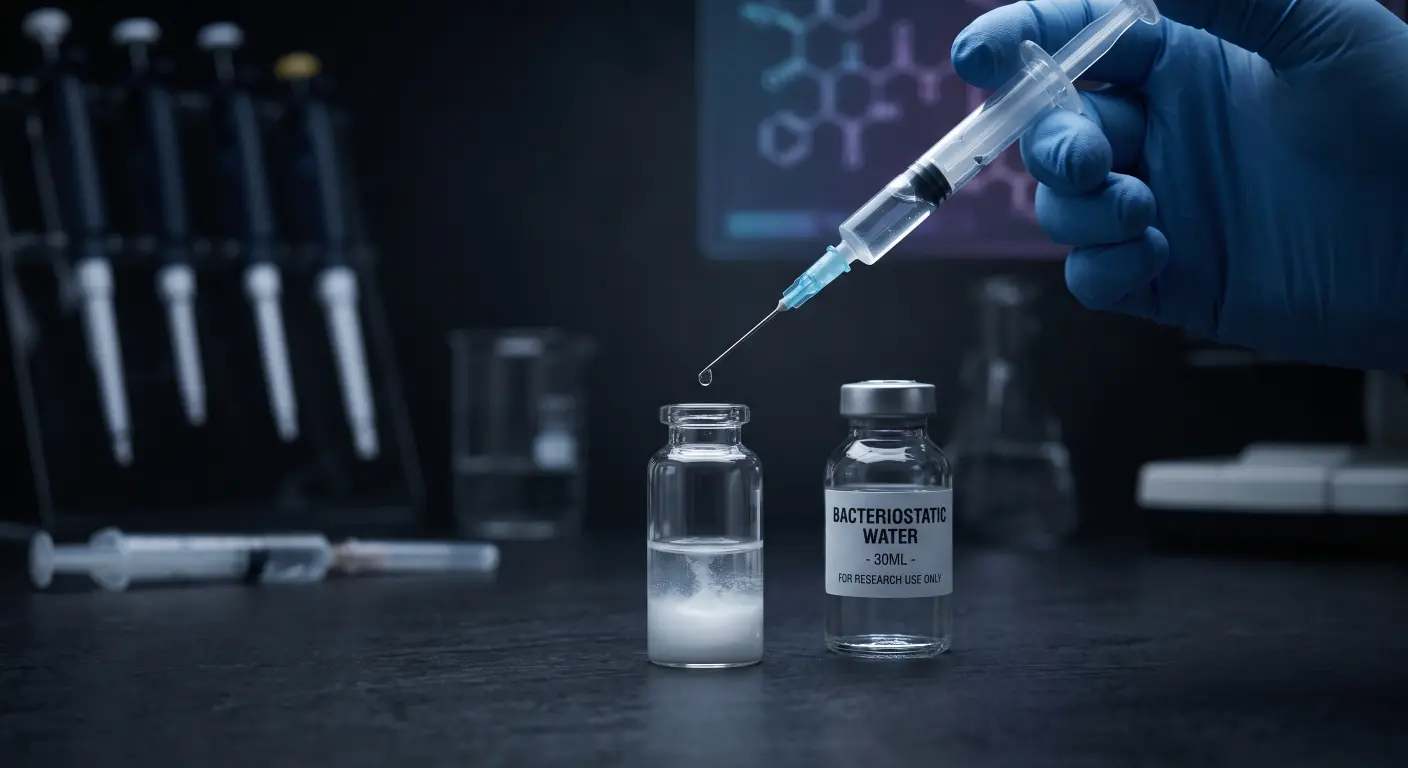
- Controlled Introduction: When transferring the diluent into the peptide vial, do not spray the liquid directly onto the lyophilized powder. Instead, angle the needle so the tip rests against the inner glass wall of the vial. Slowly depress the plunger, allowing the diluent to gently trickle down the side of the glass and pool at the bottom. This prevents turbulent mechanical stress.
- Dissolution via Swirling: Once the diluent is introduced, do not shake the vial. Shaking causes violent agitation and introduces air bubbles, both of which are highly destructive to amino acid chains. Instead, hold the vial between your thumb and index finger and gently swirl it in a smooth, continuous, circular motion until the powder is entirely dissolved. The resulting liquid should be perfectly clear, devoid of any cloudiness or floating particulate matter.
Storage Best Practices for Molecular Stability
The laws of thermodynamics dictate that once a peptide is reconstituted, its degradation clock accelerates. However, proper storage protocols can significantly slow this kinetic decay, preserving the compound for accurate research.
Short-Term Storage (Reconstituted Peptides)
Once mixed with a diluent, peptides must immediately be moved to cold storage. Reconstituted compounds should be kept in a laboratory refrigerator at temperatures between 2°C and 8°C (36°F and 46°F). At these temperatures, compounds reconstituted with Bacteriostatic Water will maintain structural integrity for approximately 21 to 28 days. After this window, the peptide chains begin to break down, and any data derived from their use may be compromised.
Long-Term Storage (Lyophilized Peptides)
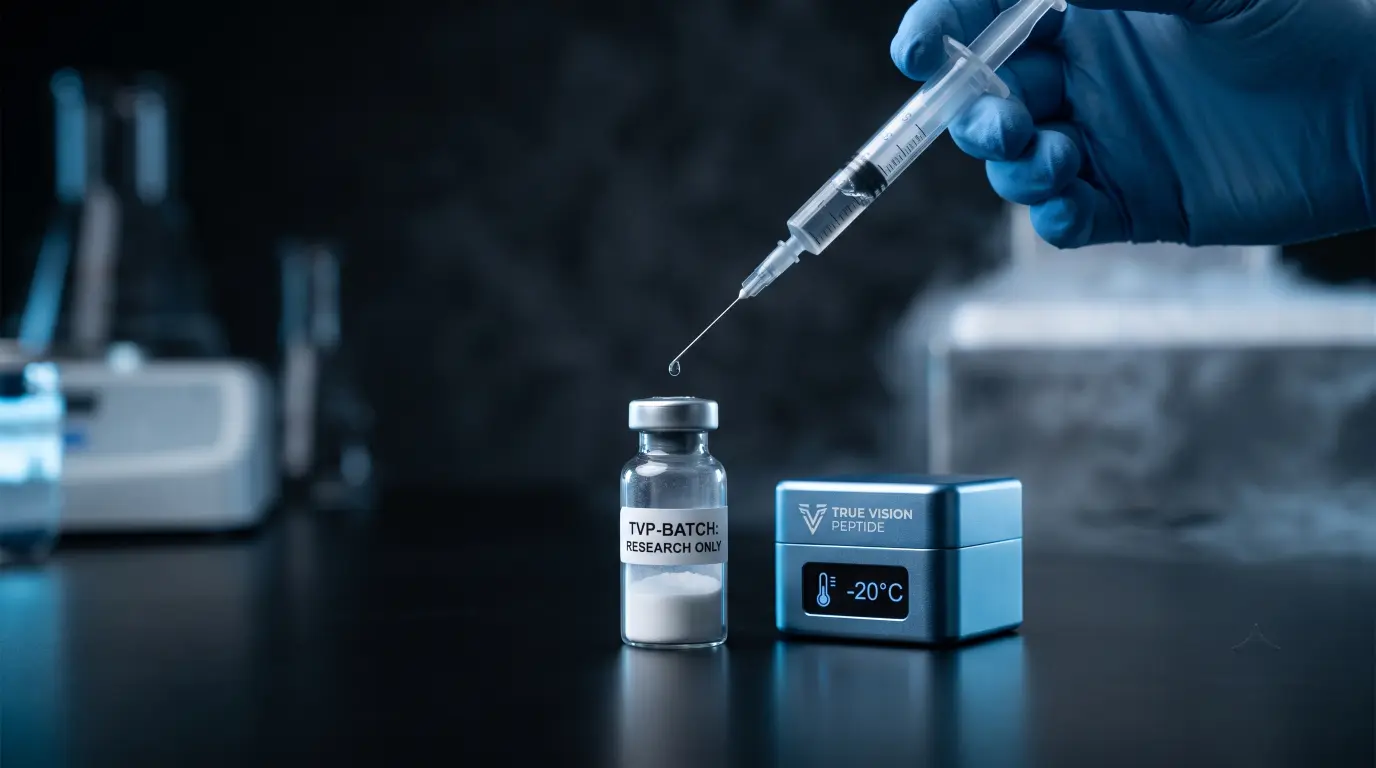
If you are storing lyophilized powder for future research, ambient room temperature is acceptable for short transit periods, but long-term storage requires freezing. Lyophilized vials should be stored in a freezer at -20°C (-4°F) or colder. Under these conditions, the powder can remain highly stable for up to 24 months.
It is highly recommended to minimize freeze-thaw cycles. If you must remove a vial from the freezer, allow it to gradually reach room temperature before reconstitution to prevent condensation from forming inside the vial, which can introduce unmeasured moisture to the powder.
Mitigating Light Exposure
Regardless of whether the peptide is lyophilized or reconstituted, ultraviolet light is universally destructive to these compounds. UV rays carry enough energy to break the chemical bonds holding the amino acid sequences together. Always store your research materials in dark environments. If vials must be left on a laboratory bench during active research, keep them shielded from direct sunlight or harsh overhead fluorescent lighting whenever possible.
Preserving the Gold Standard
At True Vision Peptides, our synthesis process strictly adheres to the highest quality control standards, ensuring every batch meets a guaranteed ≥99% purity threshold before it leaves our facility. However, that analytical accuracy is only half of the equation.
By executing precise reconstitution protocols, selecting the appropriate diluents, and strictly managing temperature and light exposure, researchers can ensure that the unparalleled purity of our compounds translates directly into reliable, reproducible laboratory data.
Disclaimer: All products sold by True Vision Peptides are strictly for in-vitro laboratory and scientific research purposes only. Our products are not intended for animal or human consumption, self-administration, or therapeutic use. True Vision Peptides does not condone the use of any research compound outside of a controlled laboratory setting.